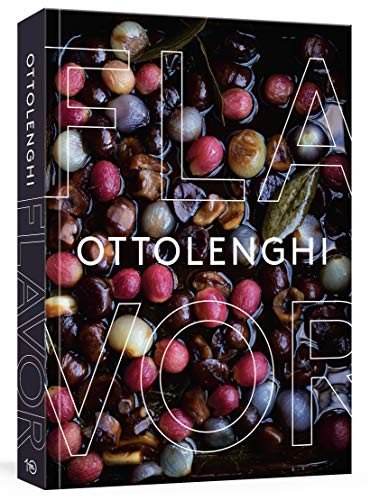
More than a hundred bold vegetable recipes built around three ideas: how cooking processes, pairings and produce create flavour
The science of tasty vegetables
Yotam Ottolenghi, the London chef behind Plenty and Jerusalem, wrote this book with Ixta Belfrage of his test kitchen, with text by Tara Wigley. Rather than simply collecting recipes, they set out to explain why certain vegetable dishes taste so good, organizing the book around three ideas: the processes that transform ingredients, the pairings that balance them, and the produce that brings its own deep flavour.
Who will enjoy it
Confident home cooks who enjoy bold, layered flavours and want to understand the techniques behind memorable vegetable dishes.
What you will get
A bold, inventive vegetable cookbook that explains how flavour is built, through charring, pairing and rich ingredients, with more than a hundred recipes.
Ottolenghi Flavor Facts: Pages, Genre and Setting
Genre
Nonfiction · Vegetables · Cooking technique · Flavor
Length
320 pages · ≈ 9 h
More about this book
How does a humble cauliflower or carrot end up tasting extraordinary? This book answers that question, and the answer is less about secret ingredients than about method. The first section covers processes such as charring, browning, infusing and brining; the second looks at pairings of fat, acidity, sweetness and chilli heat; and the third celebrates ingredients that bring natural depth, such as alliums, mushrooms, fruit and nuts.
Each recipe sits within that structure, with short notes explaining which idea it demonstrates, so cooks learn principles they can apply elsewhere. The dishes are vivid and often surprising, from crisp pepper schnitzels to rich pasta and noodle dishes, and Belfrage's influence brings Mexican, Italian and Japanese flavours into the mix. Be warned that many recipes are long, use several components and call for ingredients such as specialty chillies, miso or tamarind.
For weeknight shortcuts, Ottolenghi Simple is easier, but this is the more educational book. Most recipes are vegetarian, many vegan, and the photographs are gorgeous. Even cooks who never follow a recipe exactly will come away with ideas for their everyday vegetables. About 320 pages in the Ten Speed Press hardcover.
 Ottolenghi Simple
 Plenty
 Salt, Fat, Acid, Heat
 The Flavor Bible
 Plenty More
 Sweet
 Jerusalem
 Gun Dog
 The Koehler Method of Dog Training
 Cooking for Geeks
 Why Zebras Don't Get Ulcers