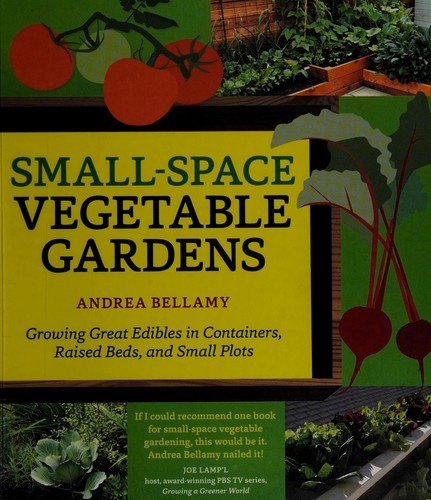
A practical guide to growing vegetables, herbs and fruit on balconies, patios, community plots and tiny yards, with profiles of dozens of edible plants
A harvest in a small space
Andrea Bellamy, an urban gardener and writer, explains how to grow food in whatever space is available. She covers assessing light and conditions, choosing between containers, raised beds and small plots, building and filling beds, soil and compost, watering, succession planting and dealing with pests organically. The second half profiles dozens of vegetables, herbs and fruits that suit small spaces, with advice on varieties, sowing, care and harvest.
Who will enjoy it
Apartment and townhouse dwellers, beginners with a balcony or patio, and community garden members who want to make the most of a small plot.
What you will get
A friendly, practical guide to growing vegetables, herbs and fruit in containers, raised beds and small plots, with clear plant profiles and planning advice.
Small-Space Vegetable Gardens Facts: Pages, Genre and Setting
Genre
Nonfiction · Urban gardening · Containers · Raised beds
Length
216 pages · ≈ 6 h
More about this book
Bellamy writes from experience, and her advice is consistently practical. She is realistic about the challenges of small spaces, such as limited sun, wind on balconies and the weight of soil, and offers sensible solutions rather than glossy fantasies. The planning chapters help readers decide what to grow based on their own conditions.
The plant profiles are the most useful section for everyday reference. Each crop gets clear guidance on space, light, sowing and harvest, along with tips on compact varieties. The photographs are attractive and show real small gardens, which makes the projects feel achievable.
Some advice reflects the author's mild Pacific Northwest climate, so gardeners in hotter or colder regions will need to adapt timings. Experienced growers may find the early chapters basic. For beginners with a balcony, patio or tiny yard, though, it is an encouraging and reliable companion. The design ideas, from vertical planters to compact raised beds, are especially helpful for anyone who wants a garden that looks good as well as producing food. Readers will also find sensible advice on budgeting, reusing materials and choosing containers that last. The tone throughout is friendly and practical, never preachy, and it encourages experimentation rather than perfection. About 216 pages in the Timber Press paperback.
 All New Square Foot Gardening
 Raised-Bed Gardening for Beginners
 Vertical Gardening
 Gardening Without Work
 Veg in One Bed
 Field Guide to Urban Gardening
 Zero Waste Home
 The Moosewood Cookbook
 Drawing on the Right Side of the Brain
 The Smitten Kitchen Cookbook
 The Backyard Homestead
 How to Eat