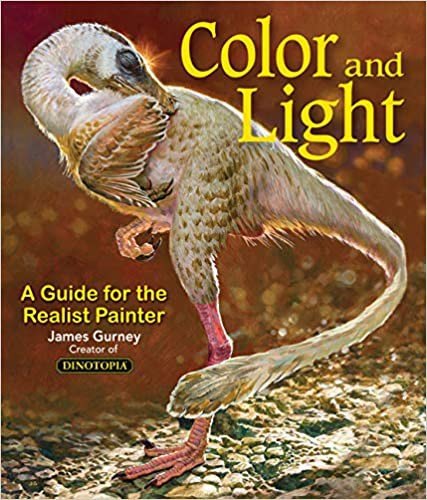
The creator of Dinotopia explains how light and color really behave, and how painters can capture them
How light and color really work
James Gurney, the artist and author of the Dinotopia books, has spent decades painting both real scenes outdoors and imaginary worlds in the studio. In this book he explains how light and color actually behave in the world, and how painters can use that knowledge to make their work more convincing, whether they paint landscapes, portraits or scenes from their imagination.
Who will enjoy it
Painters and illustrators at any level, including digital artists, who want a clear, practical understanding of how light and color work.
What you will get
A clear, beautifully illustrated guide to how light and color behave, combining science and practical painting advice in a way artists can use immediately.
Color and Light Facts: Pages, Genre and Setting
Genre
Nonfiction · Painting · Color theory · Art instruction
Length
224 pages · ≈ 7 h
More about this book
The book moves from the tradition of painting light, through the different sources of light such as sunlight, candlelight and window light, to how light falls on form and creates shadows and reflections. Later chapters explain the elements of color, paints and pigments, color relationships and the practice of mixing a limited range of colors in advance. Gurney also introduces a simple method for planning a painting's palette using shapes laid over a color wheel.
Further chapters cover visual perception, surfaces such as skin, water and foliage, and atmospheric effects such as haze, fog, rainbows and sunsets. Every point is illustrated with Gurney's own paintings and sketches, and short explanations of science sit alongside practical advice. The writing is friendly and free of jargon, and the book is equally useful for traditional and digital artists. It works best as a reference to return to while painting rather than a book to read once.
Clear, beautiful and genuinely useful, a companion to Gurney's earlier book Imaginative Realism. Many art teachers recommend it as one of the best modern guides on the subject. About 224 pages in the Andrews McMeel paperback.
 Interaction of Color
 Drawing on the Right Side of the Brain
 Steal Like an Artist
 The Elements of Color
 Keys to Drawing
 Keep Going
 The Story of Art
 Notes on Nursing
 Culture Clash
 Narrative of the Life of Frederick Douglass
 The Gardener and the Carpenter
 Baking