Of Mice and Men Themes: Dreams, Loneliness and Friendship
A dream farm, a bunkhouse of strangers and the friendship that stands against both
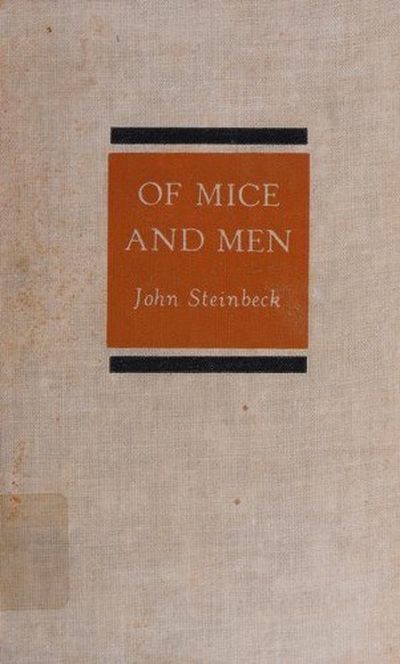
Steinbeck once said he wanted to write about people who were seldom written about: the drifting farm workers of 1930s California who owned nothing and belonged nowhere. In a hundred pages he managed to fit in almost every big human question.
That is why it turns up on so many school reading lists, and why the same few themes keep coming back in every class discussion.
The three big themes are dreams, especially the dream of owning land, loneliness, which affects almost everyone on the ranch, and friendship, the bond between George and Lennie that sets them apart from the others.
Around them run two more: the way the strong treat the weak, and what it means to show mercy.
The dream of the farm
George and Lennie's dream is simple: a few acres, a little house, some pigs and chickens, and rabbits for Lennie. They would answer to nobody and live off the fat of the land. In the Great Depression, when millions of men moved from job to job with nothing, this is the American Dream reduced to its smallest form. When Candy offers his savings, it suddenly seems possible, and even Crooks wants in. The book's sadness comes from watching a dream come so close and then vanish.
↑ Back to the topLoneliness on the ranch
The ranch is full of men who travel alone, work a month, spend their pay and move on. Slim notices how rare it is for two men to travel together. Crooks is shut out because of his race, Candy because of his age and his missing hand, and Curley's wife because she is the only woman and everyone fears her husband. Each of them, at some point, reaches out to Lennie, the one person who will listen without judging, because he does not understand enough to judge.
↑ Back to the topGeorge and Lennie's friendship
Their friendship is what makes them different. George complains constantly that Lennie holds him back, but the two of them have something nobody else on the ranch has: someone who cares what happens to them. Lennie repeats it like a lesson: they have each other. The ending tests that friendship in the hardest way possible, and readers still argue whether George's choice was love, mercy or failure.
↑ Back to the topThe strong and the weak
Power on the ranch moves down a ladder. The boss has power over the workers, Curley uses his position against bigger men, Curley's wife turns on Crooks because he is the one person below her, and the men dismiss the old, the disabled and the different. Lennie is physically the strongest person in the book and the most helpless. Steinbeck shows how a hard world turns weak people against one another.
↑ Back to the topCandy's dog and mercy
Candy's old dog is shot because it is old and useless, and Candy later says he wishes he had done it himself rather than letting a stranger do it. The scene prepares the reader for the ending. George, too, decides that if it must happen, it should be done by a friend, gently, while Lennie is thinking about the farm. The parallel makes the final chapter almost unbearable, and it is the main thing readers discuss about the book.
↑ Back to the topThe themes at a glance
| Theme | Where you see it |
|---|---|
| Dreams | The farm with rabbits; Curley's wife's film career; Crooks's hope to join |
| Loneliness | Crooks alone in the barn; Curley's wife with no one to talk to; Candy after his dog |
| Friendship | George and Lennie travelling together, unlike every other worker |
| Strong and weak | Curley picking on Lennie; Curley's wife threatening Crooks |
| Mercy | Candy's dog; George's choice at the river |
More about Of Mice and Men
Books Like Of Mice and Men
 The Grapes of WrathJohn Steinbeck
 Travels with CharleyJohn Steinbeck
 East of EdenJohn Steinbeck
 The Kite RunnerKhaled Hosseini
 Last OrdersGraham Swift
 The BFGRoald Dahl
 About a BoyNick Hornby
 Q & AVikas Swarup
This guide discusses the whole plot, including the ending.