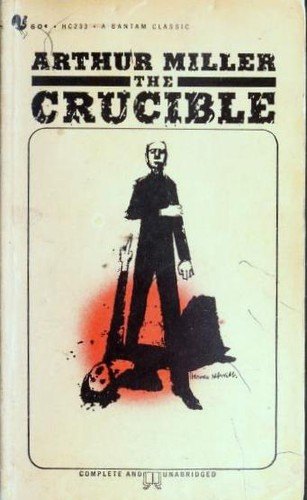
Is The Crucible a True Story? Salem and Why Arthur Miller Wrote It
Real names, real trials, and an invented love affair
Visitors to Salem today can walk past a memorial of stone benches, one for each person executed in 1692, each carved with a name and a date. Many of those names appear in The Crucible.
Miller borrowed their names, but he did not always keep their stories.
The Crucible is based on real events: the Salem witch trials of 1692, in which about 200 people were accused, 19 were hanged and one man, Giles Corey, was pressed to death. Nearly all the characters were real people.
But Miller changed key facts. The real Abigail Williams was about 11, not 17, and John Proctor was about 60; there is no evidence of an affair between them.
Play versus history
| In the play | In history |
|---|---|
| Abigail is 17 | Abigail was about 11 or 12 |
| Proctor is in his thirties | Proctor was about 60 |
| Abigail and Proctor had an affair | No evidence they even knew each other well |
| Proctor nearly confesses | Proctor always insisted he was innocent |
| Proctor, Nurse and Martha Corey hang together | They were hanged in July, August and September |
| Danforth leads the court | The chief judge was William Stoughton |
| Elizabeth is spared by her pregnancy | True, and she survived |
What really happened in Salem?
Early in 1692, in Salem Village, Massachusetts, two girls in the household of Samuel Parris began having fits that doctors could not explain. Witchcraft was blamed. The girls named Tituba, an enslaved woman in the house, and two other women. Accusations spread quickly to other girls and villages, and a special court was set up to try the cases.
Over the next year about 200 people were accused. Nineteen were hanged, Giles Corey was crushed to death for refusing to enter a plea, and several others died in jail. By 1693 the colony's governor had stopped the trials, after doubts grew about the evidence of dreams and visions.
↑ Back to the topWhat did Miller change, and why?
Miller read the trial records in Salem and noticed a moment when Abigail Williams seemed to strike at Elizabeth Proctor in court and then hesitate. From that he imagined a hidden relationship. To make it possible, he raised Abigail's age and lowered Proctor's. He also combined several judges into Danforth, merged the girls into a smaller group, and put several real deaths on a single morning for dramatic force. He added a note to the published play saying it was not meant as history.
↑ Back to the topWhat happened after the trials?
Within a few years many in Massachusetts regretted the trials. Some jurors and one judge publicly apologized, and in 1711 the colony reversed the convictions of many of the accused and paid small sums to their families. Elizabeth Proctor survived; her baby was born while she was in jail. The last person still officially convicted, Elizabeth Johnson Jr., was finally cleared by the state of Massachusetts in 2022.
↑ Back to the topWhy did Arthur Miller write The Crucible?
Miller wrote the play in the early 1950s, when congressional hearings into communism were pushing people to confess and name friends. He saw a mirror of Salem: fear, public confession and careers destroyed by accusation. Setting the story in 1692 let him write about his own time. Three years later he was called before the same committee himself, and like Proctor he refused to name names.
↑ Back to the topMore about The Crucible
Books Like The Crucible
 A Doll's HouseHenrik Ibsen
 Death of a SalesmanArthur Miller
 Native SonRichard Wright
 One Day in the Life of Ivan DenisovichAleksandr Solzhenitsyn
 Waiting for GodotSamuel Beckett
 Madame BovaryGustave Flaubert
 The Tragedy of Julius CaesarWilliam Shakespeare
 Things Fall ApartChinua Achebe
This guide discusses the whole plot, including the ending.