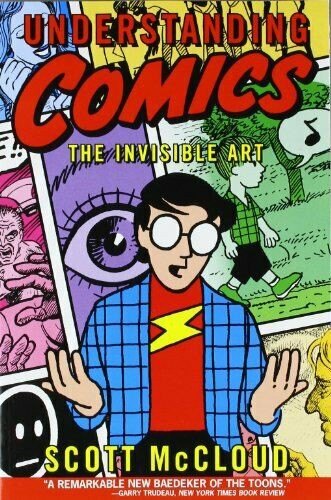
A comic book about how comics work, from panels and gutters to time, emotion and color
A comic about comics
Scott McCloud, a cartoonist, explains the art of comics in the form of a comic, with himself as a friendly cartoon narrator. He defines what comics are, traces their long history, and shows how pictures and words work together, how readers fill in the gaps between panels, and how artists use lines, panels and color to express time, motion and emotion.
Who will enjoy it
Comics fans, aspiring cartoonists, illustrators, designers, writers and teachers interested in visual storytelling.
What you will get
A brilliant, entertaining and eye-opening explanation of how comics work, told in comic form, that changes how you read every page of visual storytelling.
Understanding Comics Facts: Pages, Genre and Setting
Genre
Nonfiction · Comics · Visual storytelling · Art
Length
224 pages · ≈ 7 h
More about this book
McCloud begins by searching for a precise definition and settles on a broad idea of comics as images arranged in a deliberate order to tell a story or share information. Using this definition, he finds early examples in Egyptian paintings, medieval tapestries and ancient Mexican picture manuscripts. He then explores how cartoons work: by simplifying a face into a few lines, an artist allows readers to project themselves into a character, a process he calls amplification through simplification.
One of the book's most influential ideas concerns closure, the way readers' imaginations connect separate panels across the gutter into a continuous story. McCloud identifies different kinds of transitions between panels and compares how they are used in American, European and Japanese comics. Later chapters show how panels can represent time, how lines carry feeling, how words and pictures can share the work of storytelling, and how color affects mood. The book ends with reflections on art and creativity. Because it is drawn as a comic, the ideas are shown, not just described.
Clever, accessible and influential, a must for visual storytellers. About 224 pages in the William Morrow paperback.
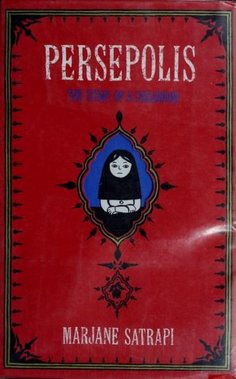 Persepolis: The Story of a Childhood
 Steal Like an Artist
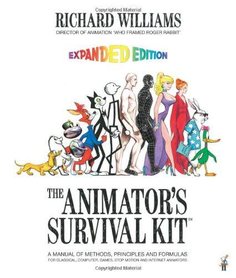 The Animator's Survival Kit
 Making Comics
 Thinking with Type
 I'm Just Here for More Food
 Veganomicon
 The Complete Houseplant Survival Manual
 Popular Mechanics Complete Home How-To
 Bread Illustrated
 The Dog Listener
 The Martha Manual