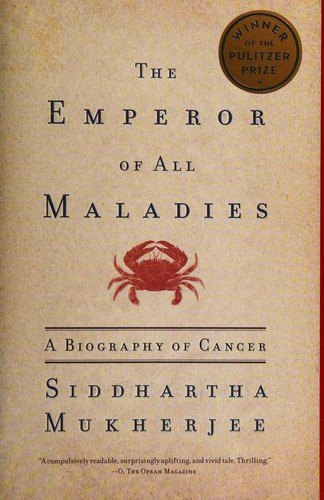
A physician tells the long history of humanity's struggle to understand and treat cancer
A biography of a disease
Siddhartha Mukherjee, a cancer physician and researcher, set out to answer a question from one of his patients: what exactly is she fighting? The result is a history of cancer from its first descriptions in ancient times to the laboratories and hospitals of today, told as a biography of a disease, with its own origins, its turning points and its many faces.
Who will enjoy it
Curious readers interested in medicine, science and history who want a clear, humane account of how our understanding of cancer developed.
What you will get
A clear, humane and gripping history of medicine that explains how cancer has been understood and treated, told through remarkable people.
The Emperor of All Maladies Facts: Pages, Genre and Setting
Genre
Nonfiction · Medicine · History of science · Cancer
Length
608 pages · ≈ 18 h
More about this book
The book begins with early references to tumours in ancient Egypt and Persia and moves through the centuries of surgery and theory that followed. Mukherjee describes the rise of radical surgery in the nineteenth century, the first experiments with chemotherapy for children with leukaemia in the twentieth, the campaigns to fund cancer research and the long struggle to prove the link between smoking and lung cancer.
Later chapters explain the discovery of the genes involved in cancer and the development of targeted drugs, which have transformed the treatment of some forms of the disease. Throughout, Mukherjee weaves in the stories of patients he has treated, especially a woman with leukaemia whose courage frames the book. The subject is serious and sometimes sad, but the writing is compassionate, clear and often hopeful. Readers who have been affected by cancer may find parts of it emotional.
Moving, illuminating and beautifully written, one of the most admired science books of its time. It explains complex ideas without oversimplifying, and readers with no scientific background can follow it easily. About 608 pages in the Scribner paperback.
 The Immortal Life of Henrietta Lacks
 Being Mortal
 A Short History of Nearly Everything
 At Home
 Cosmos
 Scattered Minds
 Awakenings
 The Gardener and the Carpenter
 Color and Light
 Narrative of the Life of Frederick Douglass
 The Winter Harvest Handbook
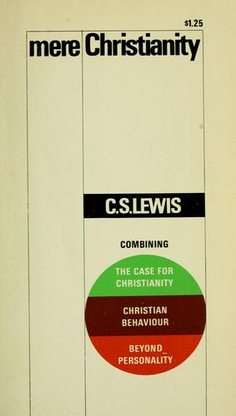 Mere Christianity