
With an alien fleet four centuries away, humanity entrusts its survival to four strategists whose plans must be kept secret from everyone
Humanity's four secret strategists
An alien civilization is on its way to Earth. Its fleet will arrive in about four hundred years, and in the meantime the aliens have deployed tiny, invisible devices that can watch and listen to everything humans do and prevent any breakthrough in physics. Nothing humans plan can be kept secret, except what happens inside a single human mind. So the United Nations launches the Wallfacer Project.
Who will enjoy it
Readers of The Three-Body Problem and fans of big-idea science fiction who enjoy strategy, cosmic scale and philosophical puzzles.
What you will get
An ambitious, mind-expanding science fiction epic in which humanity's survival depends on secret strategies against an alien enemy that can watch everything.
The Dark Forest Facts: Pages, Genre and Setting
Genre
Science Fiction · Alien invasion · Strategy · Cosmic mystery
Length
528 pages · ≈ 16 h
More about this book
Four Wallfacers are chosen and given vast resources to pursue strategies they need explain to no one. Three are famous leaders and scientists. The fourth, Luo Ji, is a lazy, self-absorbed sociologist who has no idea why he was selected, and who at first uses his position to live comfortably. Gradually he realizes that a conversation he once had with a stranger may hold the key to the universe itself.
This is science fiction on a grand scale. The plot spans centuries, with characters entering hibernation and waking in a future transformed by technology, and the ideas are thrilling: a cold, strategic theory of how civilizations behave toward one another, and a sequence involving a small alien probe that is among the most memorable set pieces in modern science fiction. The characters are less developed than the concepts, and the pacing can be uneven.
Many readers think it surpasses the first book, and its central idea has entered popular culture. Read The Three-Body Problem first; Death's End completes the trilogy. Joel Martinsen's translation is clear and readable throughout. About 528 pages in the Tor paperback.
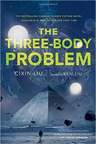 The Three-Body Problem
 Ender's Game
 Foundation and Empire
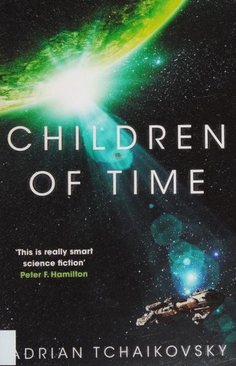 Children of Time
 Stand on Zanzibar
 Cloud Atlas
 The Left Hand of Darkness
 2001: A Space Odyssey
 The Fall of Hyperion
 Dune
 Stories of Your Life and Others
 2061: Odyssey Three