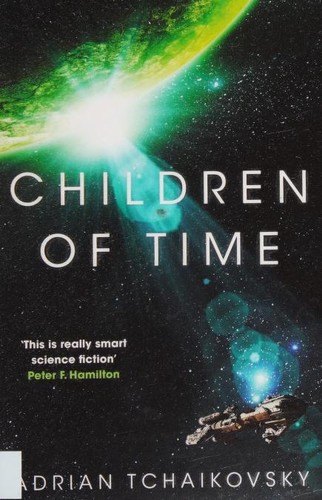
The last humans search for a new home and find a planet where spiders have evolved into a civilization
Who will inherit the new world?
Thousands of years in the future, a scientist named Avrana Kern prepares a terraformed planet for an experiment: she plans to release monkeys and a virus that will speed up their evolution. Things go terribly wrong. The monkeys never arrive, but the virus does, and it spreads among the planet's tiny jumping spiders, setting them on a path towards intelligence.
Who will enjoy it
Readers who enjoy big-idea science fiction about evolution, alien minds and the future of humanity, told across many generations.
What you will get
An ambitious, original and thought-provoking science fiction epic about evolution, intelligence, communication and what it really means to be human, told across thousands of years.
Children of Time Facts: Pages, Genre and Setting
Genre
Science Fiction · Evolution · Spiders · Generation ship
Length
600 pages · ≈ 18 h
More about this book
The novel alternates between two stories. In one, the spiders evolve over countless generations, building a society with its own science, politics and conflicts; they fight a war against ants, learn to use other insects as tools and even as living computers, and struggle with their own questions of equality. The book follows a few characters whose names reappear in each generation, which helps readers follow the long, sweeping story.
In the other story, the ark ship Gilgamesh carries the last survivors of a ruined Earth in deep sleep, searching for a planet to live on. Holsten Mason, a classicist who can read ancient languages, is woken again and again over centuries as the crew faces mutiny, decay and a stubborn satellite guarding the green planet. When humans and spiders finally meet, the question is whether two such different species can understand each other. There is some violence, and spiders are described in detail, which may not suit everyone.
Imaginative, epic and surprisingly hopeful, followed by Children of Ruin and Children of Memory. About 600 pages in the Pan paperback.
 The Three-Body Problem
 Childhood's End
 Project Hail Mary
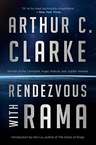 Rendezvous with Rama
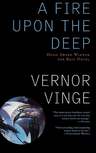 A Fire Upon the Deep
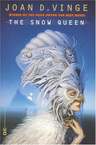 The Snow Queen
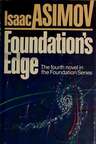 Foundation's Edge
 Lord of Light
 Hyperion
 Prelude to Foundation
 The Wanderer
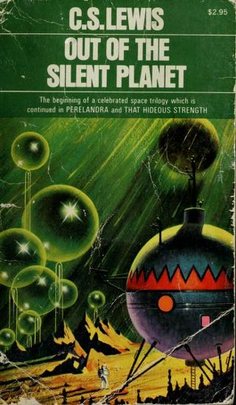 Out of the Silent Planet