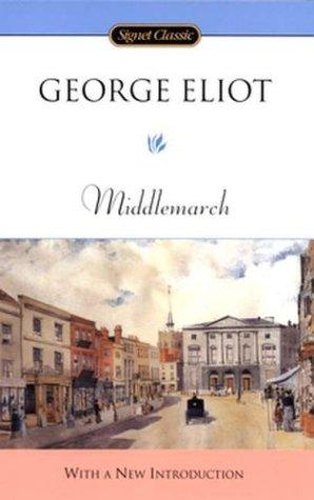
In a provincial English town, an idealistic young woman and an ambitious young doctor learn the cost of their choices
Lives in a small town
In the Midlands town of Middlemarch around 1830, Dorothea Brooke, a young woman eager to do good in the world, marries Edward Casaubon, a much older scholar she believes is a great mind. At the same time, Tertius Lydgate, a talented young doctor with plans to reform medicine, arrives in town and falls for the beautiful, self-centered Rosamond Vincy. Their stories, and many others, weave together into a portrait of a whole community.
Who will enjoy it
Readers who love long, character-rich classics with deep psychological insight and a wide view of a whole society.
What you will get
A wise, humane and deeply insightful masterpiece that shows how ordinary lives, marriages and choices are shaped by character and community, considered one of the greatest English novels.
Middlemarch Facts: Pages, Genre and Setting
Genre
Classics · Marriage · Provincial life · Ambition
Length
912 pages · ≈ 27 h
More about this book
Eliot follows several main storylines. Dorothea soon realizes that her husband is cold and that his life's work, a vast study of the world's mythologies, will never be finished. She develops a friendship with Will Ladislaw, Casaubon's lively young cousin, which provokes jealousy and a cruel condition in Casaubon's will. Lydgate, meanwhile, marries Rosamond, and their expensive tastes lead to growing debts that threaten his career and ideals.
Around them are other memorable characters: Fred Vincy, Rosamond's charming but aimless brother, who hopes to inherit money and must prove himself to win the sensible Mary Garth, and Nicholas Bulstrode, a powerful banker whose hidden past returns to haunt him and draws Lydgate into scandal. Political change, including the Reform Act of 1832, the arrival of the railway and new ideas in medicine, form the background. Eliot's narrator comments with warmth and irony on the characters' self-deceptions, and the novel's power lies in its understanding of how small choices shape lives.
Long and slow but deeply rewarding, a novel many readers return to at different ages. About 912 pages in the Signet Classics edition.
 Pride and Prejudice
 Jane Eyre
 Anna Karenina
 Bleak House
 Vanity Fair
 The Golden Bowl
 The Divine Comedy
 The Alexandria Quartet
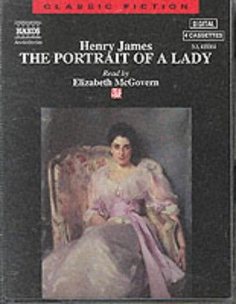 The Portrait of a Lady
 Ulysses
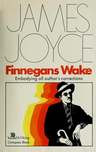 Finnegans Wake
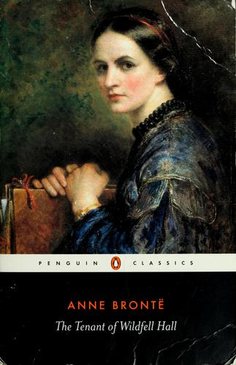 The Tenant of Wildfell Hall