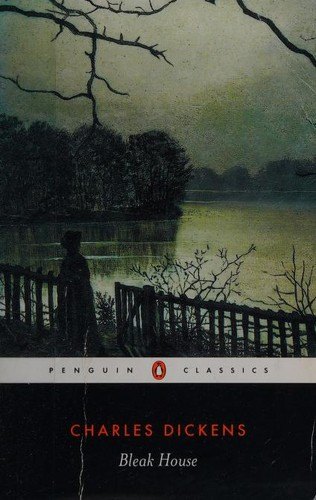
An endless court case and a guarded family secret draw together people from every level of Victorian society
An endless lawsuit and a secret
In foggy London, the court case of Jarndyce and Jarndyce, a dispute over an inheritance, has dragged on for so many years that no one remembers what it is about, and the legal costs have devoured the fortune at its centre. Esther Summerson, a modest young orphan, is taken in by the kindly John Jarndyce and goes to live at his home, Bleak House, with two young wards in the case, Ada Clare and Richard Carstone.
Who will enjoy it
Patient readers who enjoy long, richly populated classic novels mixing social satire, mystery, romance and memorable characters.
What you will get
A vast, brilliant novel combining satire, mystery and romance, with a gallery of unforgettable characters and a powerful attack on injustice and neglect.
Bleak House Facts: Pages, Genre and Setting
Genre
Classics · Law · Victorian London · Mystery
Length
1,088 pages · ≈ 32 h
More about this book
The story is told in two voices: Esther's warm first-person narrative and a sharp, satirical narrator who moves through fashionable drawing rooms, law offices and the poorest streets of London. Meanwhile the elegant, cold Lady Dedlock is shaken when she recognizes the handwriting on a legal document, and the secretive lawyer Mr. Tulkinghorn begins to investigate her past. Richard, meanwhile, becomes dangerously obsessed with the hope that the lawsuit will one day make him rich.
Dickens fills the novel with unforgettable figures, from the shrewd Inspector Bucket, one of the first detectives in English fiction, to the poor crossing sweeper Jo, the cheerful sponger Harold Skimpole and the eccentric Miss Flite with her caged birds. The book is a savage attack on the slowness and cruelty of the legal system and on the neglect of the poor, and it includes deaths, illness and suffering, handled with compassion. Its length and many subplots demand patience, but the mystery holds it together.
Ambitious, moving and brilliantly written, often called Dickens's greatest novel. It rewards slow reading over several weeks, and many readers find that its characters stay with them long afterwards. About 1088 pages in the Penguin Classics paperback, edited by Nicola Bradbury.
 Great Expectations
 Middlemarch
 Vanity Fair
 The Moonstone
 The Woman in White
 David Copperfield
 Finnegans Wake
 Parade's End
 Ulysses
 The Alexandria Quartet
 The Golden Bowl
 A Dance to the Music of Time