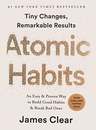
Atomic Habits Summary: the Four Laws and Key Lessons
Tiny changes, the habit loop and the Four Laws
The Four Laws and their inversions
| Law | What it means |
|---|---|
| 1. Make it obvious | Put clear cues in your environment |
| 2. Make it attractive | Link the habit to something you want |
| 3. Make it easy | Reduce friction; start very small |
| 4. Make it satisfying | Reward yourself right away |
| Inversion 1 | Make bad habits invisible |
| Inversion 2 | Make them unattractive |
| Inversion 3 | Make them difficult |
| Inversion 4 | Make them unsatisfying |
What does atomic mean?
An atom is the smallest unit of something and also a source of enormous energy. Clear's point is that a habit improved by just one per cent a day leads to a result about thirty-seven times better over a year. Getting one per cent worse a day leads almost to zero. Progress often feels invisible at first, a stage he calls the plateau of latent potential, before the results suddenly appear. That is why people give up too early.
↑ Back to the topWhy systems beat goals
Winners and losers often have the same goals, Clear notes, so goals alone cannot explain success. What differs is the system, the daily process. He suggests focusing on who you want to become rather than what you want to achieve. Every action is a small vote for a type of person: someone who reads, who runs, who writes. Habits stick best when they become part of your identity.
↑ Back to the topThe Four Laws in practice
Make it obvious: use implementation intentions, such as I will exercise at 7am in my kitchen, and habit stacking, linking a new habit to an existing one. Design your environment so good cues are visible. Make it attractive: pair something you need to do with something you enjoy, and join groups where the habit is normal.
Make it easy: reduce friction and use the two-minute rule, shrinking a habit until it takes two minutes, like reading one page. Make it satisfying: give yourself an immediate reward, track the habit on a calendar, and never miss twice in a row.
↑ Back to the topWho is James Clear?
James Clear is an American writer who began writing about habits on his website and newsletter in 2012. The book opens with his own story: in high school he was hit in the face by a baseball bat and badly injured. His slow recovery, built on small daily habits, led him to play college baseball and eventually to this subject. Atomic Habits was published by Avery in October 2018 and has sold more than 25 million copies.
↑ Back to the topLessons for the long run
Clear's later chapters add a few warnings. Choose habits that suit your natural strengths. Stay motivated by working on challenges of just the right difficulty, which he calls the Goldilocks rule. And beware of the downside of habits: once something is automatic, you stop paying attention, so review your habits regularly. Real mastery combines automatic habits with deliberate practice.
↑ Back to the topAtomic Habits argues that big results come from tiny habits repeated daily, which compound like interest. James Clear explains that habits form in a four-step loop, cue, craving, response and reward, and gives four laws for building good habits: make it obvious, make it attractive, make it easy and make it satisfying.
To break a bad habit, you invert the laws: make it invisible, unattractive, difficult and unsatisfying.
More about Atomic Habits
Books Like Atomic Habits
 Your Erroneous ZonesWayne W. Dyer
 Lean InSheryl Sandberg
 The Power of HabitCharles Duhigg
 Your Best Life NowJoel Osteen
 BoundariesHenry Cloud & John Townsend
 The SecretRhonda Byrne
 The 7 Habits of Highly Effective PeopleStephen R. Covey
 Psycho-CyberneticsMaxwell Maltz
Written by Tori Books for readers and students.