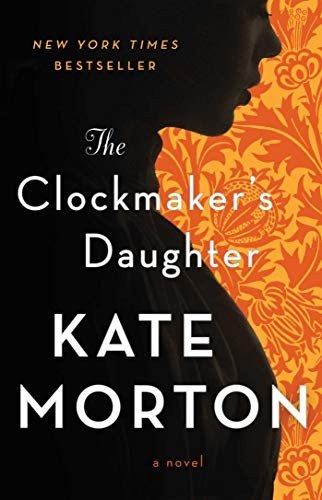
A summer at a riverside manor in 1862 ends in a death, a disappearance and a stolen jewel, and a London archivist begins to unravel it
Secrets at Birchwood Manor
In the summer of 1862, a group of young artists led by the passionate painter Edward Radcliffe retreat to Birchwood Manor, an old house on a bend of the Upper Thames, for a month of inspiration. By the end of the summer, one woman has been shot dead, another has vanished, a priceless heirloom is missing, and Edward's life is in ruins. More than a century and a half later, a London archivist finds a satchel containing a photograph and a sketchbook.
Who will enjoy it
Patient readers who love atmospheric historical mysteries with multiple timelines, old houses and slowly revealed secrets.
What you will get
An atmospheric, many-layered historical mystery about a country house on the Thames, a Victorian summer that ended in death and the secrets it left behind.
The Clockmaker's Daughter Facts: Pages, Genre and Setting
Genre
Historical Fiction · Country house · Dual timeline · Art and mystery
Length
496 pages · ≈ 15 h
More about this book
The archivist, Elodie Winslow, is about to be married and is preparing for a life she is not sure she wants. The photograph shows a beautiful woman in Victorian dress, and the sketchbook contains a drawing of a house that Elodie recognizes from a story her late mother used to tell her. Her search leads her to Birchwood Manor and into a history full of artists, thieves and grief.
Morton's signature is the braided timeline, and here she braids more strands than ever: the doomed summer of 1862, a schoolgirl at the turn of the century, a war veteran in the 1920s, a family sheltering there during the Second World War, a modern-day photographer and others, all connected by the house. Watching over them is the narrator, a woman known as Birdie Bell, who has been at Birchwood since that summer and who remembers everything. The prose is lush and the sense of place is wonderful.
The many characters can make the first half slow and confusing, and some readers find the ending less tightly resolved than Morton's best. But those who love immersive, melancholy mysteries will be rewarded. About 496 pages in the Washington Square Press paperback.
 The Forgotten Garden
 The Lake House
 The Secret Keeper
 The Distant Hours
 The House at Riverton
 Snow Falling on Cedars
 The Lions of Fifth Avenue
 The English Patient
 The Thorn Birds
 A Spell of Winter
 The Great Fire
 Brooklyn