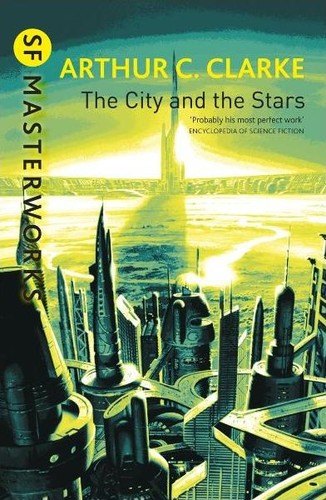
A billion years from now, in the last city on Earth, a young man born without any past life sets out to discover what lies beyond the walls
The boy who had never lived before
Diaspar is the last city on Earth, a perfect, enclosed metropolis that has existed unchanged for a billion years. Its people are stored in the city's memory banks and reborn again and again, each new life accompanied by the gradual return of memories from the old ones. Nobody has left the city in living memory, and nobody wants to. Then Alvin is born: the first true newcomer in millions of years, with no previous lives at all, and an overwhelming curiosity about the world outside.
Who will enjoy it
Readers who love big-idea science fiction, far-future settings and the sense of wonder of classic Clarke.
What you will get
A visionary science fiction classic about a curious young man who leaves the last city on Earth and discovers humanity's forgotten history.
The City and the Stars Facts: Pages, Genre and Setting
Genre
Science Fiction · Far future · Utopian city · Exploration
Length
255 pages · ≈ 8 h
More about this book
With help from Khedron, the city's licensed troublemaker known as the Jester, Alvin finds a hidden way out of Diaspar and discovers Lys, a green, pastoral land where people live short natural lives and communicate by thought. The two societies have forgotten each other entirely, and each regards the other with suspicion. From there, Alvin's search leads him to ancient machines, a long-abandoned spaceport and eventually to the stars, where the truth about humanity's past is stranger than any legend Diaspar has told.
This is Clarke at his most visionary. The scale is breathtaking, spanning millions of years and the history of the galaxy, yet the story is driven by a simple, human impulse: the refusal to accept limits. The contrast between Diaspar, where technology preserves everything, and Lys, where life is natural and fleeting, raises questions about immortality, comfort and progress that feel more relevant than ever.
The characters are thinly drawn and the dialogue can be stiff, as in much classic science fiction. But the ideas and the sense of wonder are extraordinary, and many readers consider it his finest novel. About 255 pages in the Gollancz SF Masterworks paperback.
 Rendezvous with Rama
 Childhood's End
 Foundation
 The End of Eternity
 2061: Odyssey Three
 3001: The Final Odyssey
 2001: A Space Odyssey
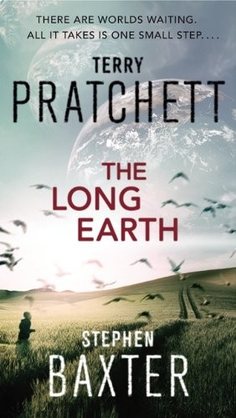 The Long Earth
 The Diamond Age
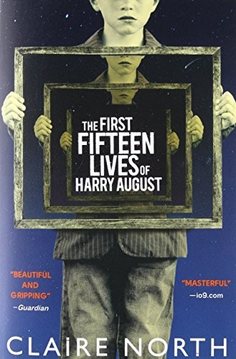 The First Fifteen Lives of Harry August
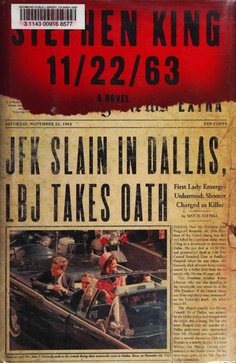 11/22/63