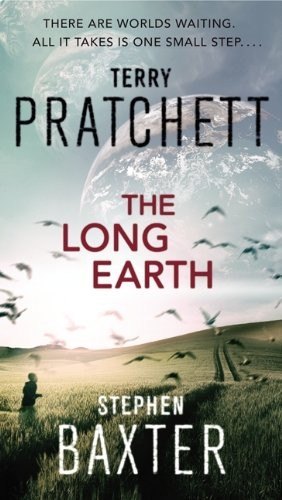
A simple homemade device lets people step into an endless chain of parallel Earths, and humanity begins to spread
Step Day and the endless Earths
One day, plans for a simple device appear on the internet, a little box with a switch, powered by a potato. Children all over the world build it, flip the switch and find themselves stepping sideways into a parallel Earth, a wild version of our world without any people. Beyond it lies another, and another, an apparently endless chain of Earths that becomes known as the Long Earth.
Who will enjoy it
Readers who enjoy big-idea science fiction, exploration stories and thoughtful speculation about how humanity would change with unlimited room to grow.
What you will get
A thoughtful, wide-ranging adventure about the discovery of endless parallel Earths, the people who explore them and how such a change would reshape humanity.
The Long Earth Facts: Pages, Genre and Setting
Genre
Science Fiction · Parallel worlds · Exploration · Frontier
Length
432 pages · ≈ 13 h
More about this book
Joshua Valienté, a quiet young man who grew up in an orphanage, turns out to be a natural stepper who can move between worlds without a device. He is recruited by Lobsang, a mysterious and talkative artificial intelligence, to travel on an airship farther along the Long Earth than anyone has gone before. On the way they meet other travellers, strange creatures and humanoid beings, and they notice that something seems to be driving them away from the distant Earths.
Meanwhile, the original Earth changes dramatically: people leave cities to settle new worlds, economies are shaken, and those who cannot step feel left behind and resentful. The novel combines Pratchett's warmth and wit with Stephen Baxter's careful science-fiction ideas. It is more a journey of discovery than a tightly plotted thriller, with many side stories, and some readers find the pace slow, while others love the sense of wonder.
Imaginative, curious and humane, the first of five books in the series, followed by The Long War. It suits readers who enjoy speculation and exploration more than fast action. About 432 pages in the Harper mass-market paperback.
 Good Omens
 Ringworld
 Dark Matter
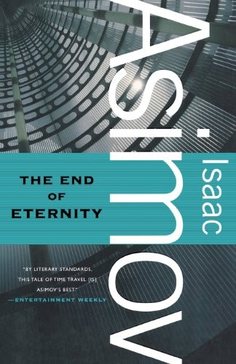 The End of Eternity
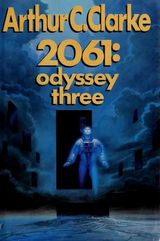 2061: Odyssey Three
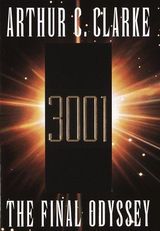 3001: The Final Odyssey
 The First Fifteen Lives of Harry August
 The Diamond Age
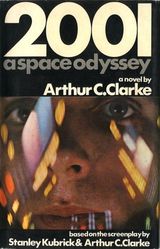 2001: A Space Odyssey
 Rendezvous with Rama
 11/22/63
 Cloud Atlas