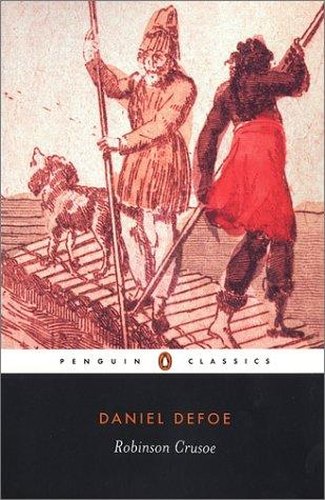
A shipwrecked sailor survives alone on a remote island for twenty-eight years
The original castaway story
Against his father's advice, young Robinson Crusoe goes to sea. After several adventures, his ship is wrecked in a storm, and he is the only survivor, washed up on an uninhabited island off the coast of South America. With tools and supplies rescued from the wreck, he builds a shelter, learns to farm and keep goats, and slowly makes a life for himself alone.
Who will enjoy it
Readers of classics and adventure stories, and anyone fascinated by survival and self-reliance.
What you will get
A founding classic of adventure fiction, full of practical detail about survival, resourcefulness and patience, and the inspiration for countless castaway stories.
Robinson Crusoe Facts: Pages, Genre and Setting
Genre
Classics · Survival · Castaway · Adventure
Length
288 pages · ≈ 8 h
More about this book
The novel is written as Crusoe's own account. Before the shipwreck, he is captured by pirates and enslaved, escapes in a small boat and becomes a planter in Brazil. Then a trading voyage ends in disaster, and he finds himself alone on the island. Defoe describes in great detail how Crusoe makes repeated trips to the wrecked ship on a raft, bringing back tools, guns, food and canvas, and then builds a fortified home, tames goats, grows barley and rice, bakes bread and teaches himself to make pottery and baskets.
Crusoe keeps a journal, counts the days and reflects on his past choices, gradually finding peace with his solitude. His most famous setbacks include building a huge canoe that turns out to be too heavy to launch. After many years he discovers a single human footprint in the sand, and learns that visitors from the mainland sometimes come to the island. He rescues one of their captives and names him Friday, and the two become companions. Modern readers will notice attitudes of the period, especially in Crusoe's view of himself as Friday's master.
A slow, detailed classic. About 288 pages in Penguin Classics, with notes.
 Treasure Island
 My Side of the Mountain
 Hatchet
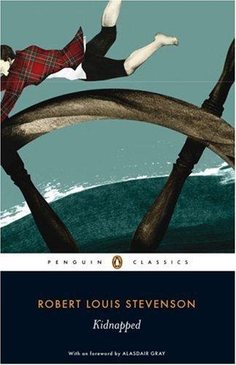 Kidnapped
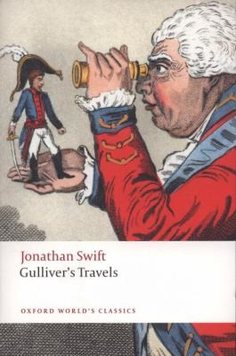 Gulliver's Travels
 A Dance to the Music of Time
 Go Tell It on the Mountain
 A Passage to India
 Mansfield Park
 Finnegans Wake
 The Divine Comedy
 The Golden Bowl