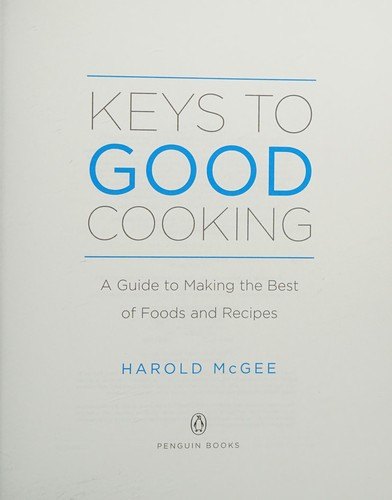
A concise, science-based guide to the essential facts every home cook needs for better results
The key facts behind good cooking
Harold McGee, author of the classic On Food and Cooking, wrote this book as a practical companion for everyday cooks. It is not a cookbook and contains no recipes. Instead, it gathers the most useful facts about ingredients, kitchen equipment, cooking methods and food safety into short, clear statements that help readers understand any recipe and get it right.
Who will enjoy it
Home cooks of every level who want to understand why recipes work and how to fix common problems, without reading a long scientific book.
What you will get
A clear, practical and reliable kitchen reference that explains the essential facts behind good cooking, helping you understand recipes and avoid common mistakes.
Keys to Good Cooking Facts: Pages, Genre and Setting
Genre
Nonfiction · Cooking · Food science · Kitchen reference
Length
576 pages · ≈ 17 h
More about this book
The first part covers the basics of the kitchen: how to choose and store ingredients, which pots, pans, knives and appliances are useful and why, how heat moves through food, and how to keep food safe from spoilage and bacteria. The second part looks at the main cooking methods, from boiling and steaming to frying, roasting and grilling, explaining what each does to food.
The largest part goes through the foods themselves, chapter by chapter: fruits and vegetables, milk and cheese, eggs, meats, fish and shellfish, grains, pasta, breads, sauces, chocolate, sugar and desserts. Each chapter consists of short numbered points, so it is easy to look up how to keep vegetables green, why meat should rest or how to stop sauces from separating. The style is plain and reliable rather than chatty, and there are no photographs, but the information is trustworthy and easy to use.
A dependable, practical reference to keep beside the stove and consult whenever a recipe leaves you wondering why, and a gentle introduction for readers not ready for the much longer On Food and Cooking. About 576 pages in the Penguin paperback.
 On Food and Cooking
 Salt, Fat, Acid, Heat
 Ratio
 How to Cook Everything
 The Case for Christ
 The Consolations of Philosophy
 The Happiness Hypothesis
 Etiquette
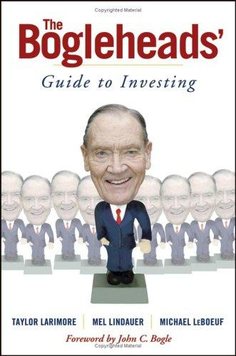 The Bogleheads' Guide to Investing
 Homegrown Herbs
 Beating the Street
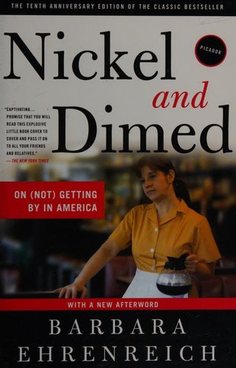 Nickel and Dimed