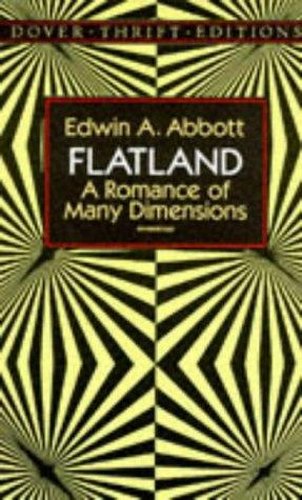
A square living in a two-dimensional world discovers the existence of a third dimension
A world of two dimensions
The narrator, who calls himself A Square, lives in Flatland, a world with only two dimensions, length and breadth. Its inhabitants are geometric figures: lines, triangles, squares, pentagons and circles. They cannot see or imagine anything above or below their flat world, and their society is organized in a strict hierarchy based on how many sides each figure has.
Who will enjoy it
Curious readers who enjoy mathematical ideas, thought experiments and sharp social satire in a short, unusual classic.
What you will get
A short, ingenious classic that makes the idea of extra dimensions easy to grasp while satirizing rigid social hierarchy and narrow thinking.
Flatland Facts: Pages, Genre and Setting
Genre
Classics · Geometry · Satire · Dimensions
Length
96 pages · ≈ 3 h
More about this book
The first half describes Flatland's society in detail: how its people recognize one another, how houses are built and how the many-sided Circles rule over everyone else. Abbott uses this world to satirize the rigid class system and attitudes of Victorian England, including its treatment of women, who in Flatland are mere straight lines. The satire is sharp, though some passages can be uncomfortable for modern readers if their irony is missed.
In the second half, A Square dreams of Lineland, a world of one dimension whose king cannot imagine a second, and then is visited by a Sphere from Spaceland, who lifts him into the third dimension. Changed forever, he tries to teach others about higher dimensions, with unhappy consequences. The book offers an elegant way to think about a fourth dimension by analogy, and it has inspired scientists, mathematicians and writers for more than a century. This edition includes an introduction by Banesh Hoffmann.
Clever, unusual and thought-provoking, a short classic that rewards rereading. Readers interested in mathematics, physics or science fiction will find it especially rewarding, and it can be read in a single sitting. About 96 pages in the Dover Thrift paperback.
 The Time Machine
 Gulliver's Travels
 The Phantom Tollbooth
 The Screwtape Letters
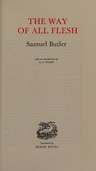 The Way of All Flesh
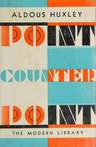 Point Counter Point
 Waiting for Godot
 Sister Carrie
 The Plague
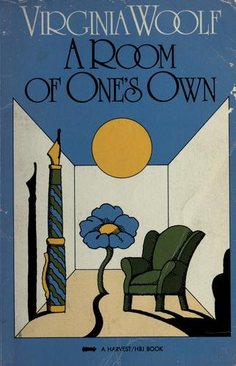 A Room of One's Own
 The Great Divorce