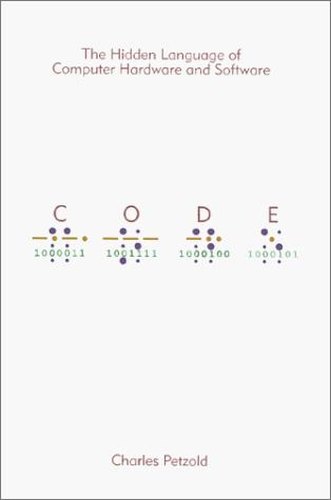
Starting from flashlights and Morse code, this classic explains step by step how computers really work, building up from simple circuits to a complete machine
From flashlights to computers
Charles Petzold explains how computers work by building one up from the simplest possible pieces. He begins with Morse code, Braille and flashlights blinking messages, moves on to switches, relays and telegraphs, and shows how these can be combined into logic gates, adding machines and memory. Step by step, he constructs a working computer on paper, then explains operating systems, programming languages and graphics, giving readers a real understanding of what happens inside the machines they use every day.
Who will enjoy it
Curious readers with no technical background, beginning programmers who want to understand the machine, and anyone who has wondered what really happens inside a computer.
What you will get
A classic explanation of how computers work, building step by step from Morse code and simple circuits to logic gates, memory and a complete machine.
Code: The Hidden Language of Computer Hardware and Software Facts: Pages, Genre and Setting
Genre
Nonfiction · How computers work · Binary and logic · Computing history
Length
400 pages · ≈ 12 h
More about this book
Petzold's approach is brilliant in its simplicity. By starting with things everyone understands, such as signalling with flashlights or building simple circuits with batteries and bulbs, he makes each step feel obvious, and by the end readers have climbed all the way to a working processor without ever feeling lost. Each chapter builds directly on the last, so readers who take their time will find that nothing is skipped or taken for granted.
The middle chapters on binary numbers, logic gates and adding machines are the heart of the book, and the moment when simple switches combine to perform arithmetic is genuinely exciting. Petzold also weaves in history, from Samuel Morse to the early computer pioneers, which gives the technical explanations a human context.
The later chapters, on software and operating systems, move faster and feel more dated in the first edition, and some readers find the electronics detail in the middle demanding. A revised second edition appeared in two thousand and twenty-two with updated material. For anyone who wants to truly understand computers from the ground up, it is a classic. About 400 pages in the Microsoft Press paperback.
 Clean Code
 The Pragmatic Programmer
 Eloquent JavaScript
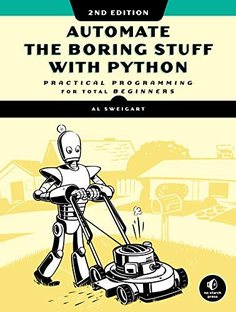 Automate the Boring Stuff with Python
 Being a Dog
 Teaming with Microbes
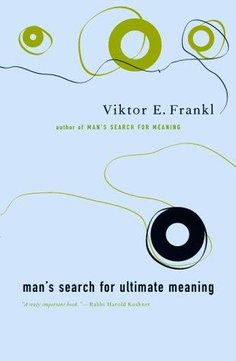 Man's Search for Ultimate Meaning
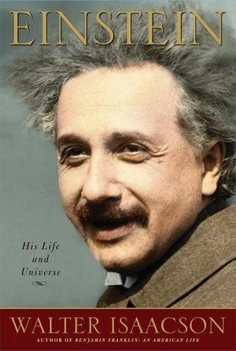 Einstein: His Life and Universe
 Click to Calm
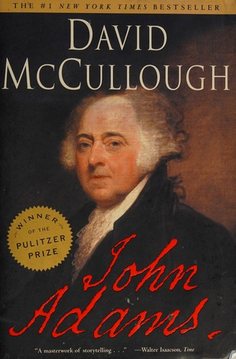 John Adams
 Vegetable Literacy
 Awakenings