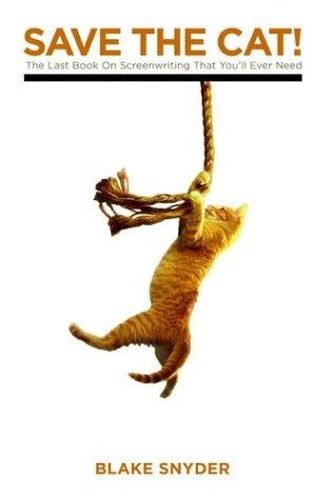
A popular, practical guide to screenwriting that breaks stories down into clear, usable structure
The beats every story needs
Blake Snyder, a Hollywood screenwriter who sold several scripts, wrote this fast, funny guide to writing films that audiences and studios want. The title refers to one of his rules: early in a story, the hero should do something that makes us like them, such as saving a cat. The book is written for screenwriters, but its ideas about structure are now used by novelists and storytellers of all kinds.
Who will enjoy it
Aspiring screenwriters, novelists and anyone who wants a clear, practical framework for structuring stories.
What you will get
A fast, practical and entertaining guide that gives writers a clear framework for planning stories, with lots of examples from popular films.
Save the Cat! Facts: Pages, Genre and Setting
Genre
Nonfiction · Screenwriting · Story structure · Writing craft
Length
195 pages · ≈ 6 h
More about this book
Snyder begins with the idea and the logline, the one-sentence summary that must make people want to see the film. He then sorts films into ten categories of his own invention, with names like Monster in the House, Golden Fleece and Dude with a Problem, arguing that every story belongs to a type with its own rules. Examples come from well-known films, which makes his ideas easy to grasp.
The heart of the book is the beat sheet, a breakdown of a script into fifteen key moments, from the opening image and the catalyst to the midpoint, the moment when all seems lost and the finale. Snyder also explains how to lay out a story on forty index cards pinned to a board, and offers memorable rules of thumb for common problems. Critics say the formula can make stories predictable, and some advice is aimed at the Hollywood market of its time, but many writers find it a helpful starting point.
Practical, quick and encouraging, a handy companion for anyone planning a story. About 195 pages in the Michael Wiese paperback.
 Bird by Bird
 On Writing
 Steal Like an Artist
 Show Your Work!
 The Emotion Thesaurus
 Battle Hymn of the Tiger Mother
 Perfect Puppy in 7 Days
 Home Improvement for Dummies
 It's Me or the Dog
 Imagine
 Let It Rot!
 Made in America