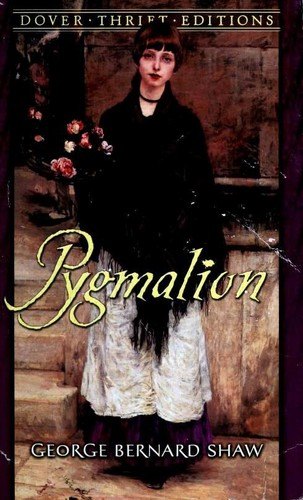
A phonetics professor bets he can pass off a London flower girl as a duchess by changing the way she speaks
A flower girl becomes a lady
One rainy night in London, Professor Henry Higgins, an expert in phonetics, meets Eliza Doolittle, a poor cockney flower girl, and boasts to Colonel Pickering that he could teach her to speak so well that she could pass for a duchess. The next day, Eliza turns up at his house, offering to pay for lessons so that she can work in a flower shop.
Who will enjoy it
Readers who enjoy witty classic plays about class, language and independence, and fans of the musical My Fair Lady.
What you will get
A sparkling, witty comedy about language, class and independence, with one of the most memorable and independent heroines in English drama.
Pygmalion Facts: Pages, Genre and Setting
Genre
Classics · Play · Class · Language
Length
96 pages · ≈ 3 h
More about this book
Higgins accepts the challenge and takes Eliza into his house for months of exhausting lessons, treating her more like an experiment than a person. Her father, the dustman Alfred Doolittle, arrives to see what he can gain from the situation and turns out to be one of the play's funniest characters. A famous scene at a tea party shows Eliza speaking perfect pronunciation while discussing shocking topics, to great comic effect.
After Eliza succeeds at a grand reception, Higgins and Pickering congratulate themselves and ignore her, and she realizes she no longer belongs in her old world or their new one. The final acts turn into a sharp argument about respect, independence and what she is worth as a person. Shaw deliberately avoided a conventional romantic ending and later wrote an afterword explaining what happens to Eliza next. The play is short, quick to read and very funny.
Witty, sharp and still relevant, a classic that is easy and enjoyable to read. Its sharp dialogue and questions about class, education and independence make it a favourite in classrooms and theatres alike. About 96 pages in the Dover Thrift edition.
 The Importance of Being Earnest
 A Doll's House
 Twelfth Night
 Cyrano de Bergerac
 Northanger Abbey
 Zuleika Dobson
 Emma
 Barchester Towers
 A Connecticut Yankee in King Arthur's Court
 Through the Looking-Glass and What Alice Found There
 Candide
 The Ginger Man