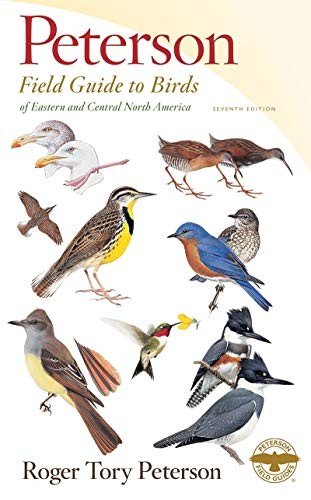
Peterson Field Guide to Birds of Eastern and Central North America
The classic bird guide, with paintings and arrows that point straight to the marks that tell species apart
The guide that started birdwatching
In 1934 Roger Tory Peterson published a small field guide that made bird identification possible for ordinary people. His simple idea was to paint similar birds in similar poses and use arrows to point out the key field marks that tell them apart. The seventh edition of the eastern and central guide keeps the Peterson system and adds updated text, new range maps and new paintings.
Who will enjoy it
Beginning and experienced birdwatchers, hikers, gardeners and families who want to know which birds they are seeing.
What you will get
The trusted pocket companion that has taught generations to recognize birds, combining beautiful paintings with a clear, simple system you can use in seconds.
Peterson Field Guide to Birds of Eastern and Central North America Facts: Pages, Genre and Setting
Genre
Nonfiction · Birdwatching · Field guide · Nature
Length
392 pages · ≈ 12 h
More about this book
Roger Tory Peterson was a painter and naturalist who wanted to make birdwatching easy. Before his first guide, people often identified birds by collecting them or studying technical descriptions. Peterson painted birds in similar side views, grouped look-alikes together and added small arrows pointing to the field marks that really matter, such as a wing bar, an eye ring or a patch of color. The method, now known as the Peterson Identification System, became the model for field guides of every kind.
The seventh edition covers the birds of eastern and central North America, from the Atlantic coast to the Great Plains. Birds are arranged by family, and on each spread Peterson's paintings face short descriptions of appearance, voice, habitat and similar species. Updated range maps show where each bird lives in summer, winter and migration. A team of experienced birders, artists and mapmakers revised the text and added new paintings to reflect current knowledge. Introductory pages explain how to use the guide, how to look at a bird and which features to notice first.
Compact, clear and built for the field. About 392 pages in a portable format.
 No Dig
 Last Child in the Woods
 Peak
 Give and Take
 The Backyard Homestead
 Switch
 The Lean Startup
 Mini Farming
 We Should All Be Feminists
 All New Square Foot Gardening
 Martha Stewart's Homekeeping Handbook
 The Happiness Hypothesis