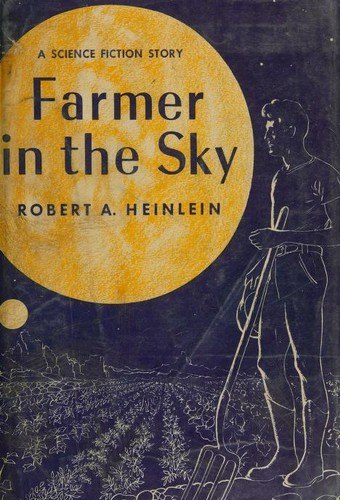
A teenage boy emigrates with his family to Ganymede, one of Jupiter's moons, where colonists must build farmland out of bare rock
Homesteading on a distant moon
Bill Lermer lives on an overcrowded, rationed Earth, and when his father decides to emigrate to the colony on Ganymede, Bill reluctantly goes along with his new stepmother and stepsister. The journey is long, and life on arrival is harder than the brochures promised. Land has to be made from crushed rock and soil bacteria, shelters must be built, and the colony's survival depends on a fragile heat trap that keeps the moon habitable.
Who will enjoy it
Young readers interested in space colonisation, fans of Heinlein's classic juveniles, and anyone who enjoys pioneer stories with a science fiction twist.
What you will get
A classic science fiction pioneer story about a teenager whose family emigrates to a farming colony on Ganymede and must build a life from bare rock.
Farmer in the Sky Facts: Pages, Genre and Setting
Genre
Science Fiction · Space colony · Pioneers · Coming of age
Length
221 pages · ≈ 6 h
More about this book
Heinlein essentially retells the American homestead story on a moon of Jupiter, and it works remarkably well. The practical details of making soil, building shelters and growing crops in a hostile environment are fascinating, and Bill's growing pride in his own land gives the story a satisfying arc. Heinlein makes the hard physical work feel heroic rather than dull, and the colony's makeshift engineering is described with obvious enthusiasm.
The book is also about family. Bill struggles to accept his stepmother and stepsister, and their gradual coming together is handled with understatement. A serious disaster in the second half tests the whole colony and brings real loss, handled with restraint, and Bill's response shows how far he has grown. The adults are portrayed as capable but fallible, and Bill learns as much from their mistakes as from their advice, which gives the story an honest, grown-up feel.
The science is dated in places, and the Scout-camp tone of the early chapters may feel old-fashioned. Some readers find the ending abrupt. For anyone interested in what settling another world might really involve, it remains thought-provoking, and it won a retrospective Hugo Award. About 221 pages in the Del Rey mass-market paperback; some printings list 224.
 Space Cadet
 Red Planet
 Between Planets
 The Martian
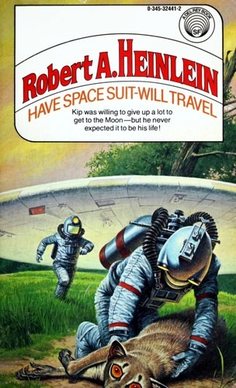 Have Space Suit—Will Travel
 The Moon Is a Harsh Mistress
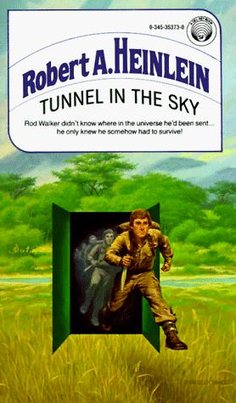 Tunnel in the Sky
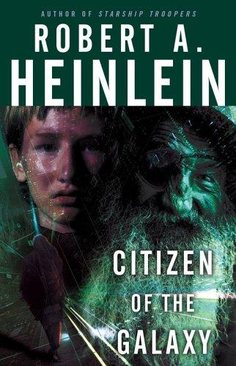 Citizen of the Galaxy
 Starship Troopers
 Stranger in a Strange Land
 Double Star
 The Host