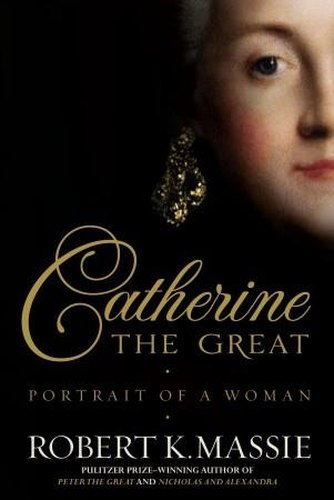
How an obscure German princess became empress of Russia and one of the most remarkable rulers in history
From minor princess to empress
She was born Sophia, the daughter of a minor German prince, with no fortune and few prospects. At fourteen she was brought to Russia to marry the heir to the throne, a strange and immature young man. She changed her name to Catherine, learned the language, survived years of loneliness and court intrigue, and in 1762 seized power from her husband in a coup. She ruled the largest empire on earth for thirty-four years.
Who will enjoy it
Readers who enjoy big narrative biographies, royal history and stories of remarkable women who shaped their times.
What you will get
A sweeping, absorbing biography of an obscure princess who became empress of Russia, full of court intrigue, ambition and Enlightenment ideas.
Catherine the Great Facts: Pages, Genre and Setting
Genre
Nonfiction · Biography · Russian history · Enlightenment
Length
672 pages · ≈ 20 h
More about this book
Massie, best known for Nicholas and Alexandra and Peter the Great, devotes much of the book to Catherine's early years, and it reads almost like a novel: a bright, lonely young woman, a hostile mother-in-law empress, a husband who preferred toy soldiers, and a court where every letter might be read. Her decision to act, and the night of the coup itself, are told with real suspense.
The second half covers her reign: her correspondence with Voltaire and Diderot, her attempt to draft a new code of laws, her vast art collection that became the Hermitage, wars with the Ottoman Empire, the terrifying Pugachev rebellion and her partnership with Grigory Potemkin, the great love and political partner of her life. Massie admires her but does not ignore her failures, especially her reluctance to free the serfs. Some readers find the detail heavy, but the storytelling rarely flags.
A rich, readable portrait of a ruler and a woman, and a good companion to other big biographies. Colour plates of portraits are included. About 672 pages in the Random House trade paperback.
 John Adams
 Alexander Hamilton
 Leonardo da Vinci
 Wild Swans
 The Autobiography of Malcolm X
 Einstein: His Life and Universe
 Benjamin Franklin: An American Life
 Cleopatra: A Life
 The Snowball
 Andrew Carnegie
 The Story of Art
 The New Book of Middle Eastern Food