 Historical Fiction · Hopeful
A blind girl in Paris and a German radio-gifted orphan, on opposite sides of World War II
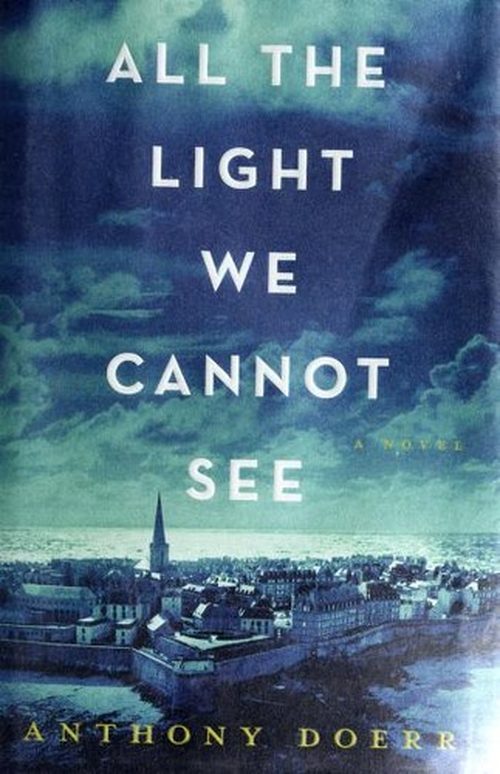
All the Light We Cannot See
A blind girl in Paris and a German orphan, on opposite sides of World War II
Marie-Laure is a blind French girl who learns to find her way by touch and sound. When the Nazis occupy Paris, she and her father flee to the walled port of Saint-Malo, carrying a valuable and dangerous gem. Werner is a German orphan from a mining town whose talent for building and repairing radios wins him a place at a brutal Hitler Youth academy and later an assignment to track the Resistance. Their paths converge in occupied France, in a novel about how people try to be good to one another under extreme circumstances.
More about this book
Who
Marie-Laure LeBlanc, a blind girl in Paris who lives with her father, a master locksmith at the Museum of Natural History, and Werner Pfennig, an orphan in the German coal-mining town of Zollverein who has a gift for repairing radios.
World
It opens in 1934, with two young protagonists whose lives do not yet intersect, and it also reaches the Battle of Saint-Malo in August 1944.
What makes it different
The chapters are short, more than a hundred of them, and alternate between the two. The story is not told in a straight line: sections set in Saint-Malo in 1944 are mixed with earlier ones that move forward from 1934. Doerr conceived the book on a train ride in 2004, visited Saint-Malo in 2005 and spent about ten years writing it, reading wartime diaries and letters.
Feel
A war novel with a strong interest in science and the natural world. It won the 2015 Pulitzer Prize for Fiction and the Andrew Carnegie Medal, and was adapted by Netflix in 2023.