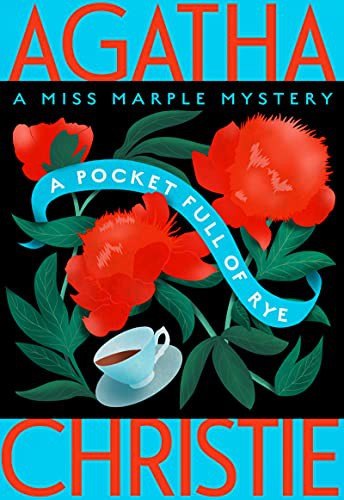
A wealthy businessman dies suddenly at his office with rye grain in his pocket, and Miss Marple sees the pattern of an old nursery rhyme
Sing a song of sixpence
Rex Fortescue, a ruthless and very rich financier, collapses at his City office after his morning tea and dies soon afterward. He has been poisoned, and the police find, inexplicably, a handful of rye grain in his jacket pocket. Inspector Neele begins investigating the household at Yewtree Lodge, a large suburban mansion full of resentments: a much younger second wife, two sons on bad terms with their father, a sharp-tongued daughter and a strange elderly relative.
Who will enjoy it
Christie fans and anyone who enjoys a classic, clever whodunit with a nursery-rhyme pattern and a sharp-eyed elderly detective.
What you will get
A clever, atmospheric Miss Marple mystery in which a series of deaths in a wealthy family seem to follow an old nursery rhyme.
A Pocket Full of Rye Facts: Pages, Genre and Setting
Genre
Mystery & Thriller · Miss Marple · Nursery rhyme murders · Country house
Length
256 pages · ≈ 8 h
More about this book
More deaths follow, and Miss Marple arrives at the house, not as a celebrity detective but out of a personal duty: one of the victims is a young maid she once trained. She quickly notices what the police have missed, that the events echo the nursery rhyme Sing a Song of Sixpence, from the rye in the pocket to the blackbirds that mysteriously appeared in the house. Working alongside the patient and intelligent Neele, she begins to untangle the family's past.
Christie is in excellent form here. The household is full of plausible suspects, each with a motive, and the nursery-rhyme pattern adds an eerie, almost playful menace. Miss Marple's quiet anger on behalf of a vulnerable girl gives the book an unexpected emotional edge, and the final chapter is one of Christie's most poignant.
Miss Marple appears relatively late, which may disappoint readers expecting her throughout, and some of the solution relies on coincidence. Still, the puzzle is satisfying and the ending lingers. It is a perfect introduction for readers new to Miss Marple, since it shows both her gentleness and her steel. About 256 pages in the William Morrow paperback.
 The Body in the Library
 A Murder Is Announced
 A Caribbean Mystery
 The Beekeeper's Apprentice
 Dumb Witness
 The Mysterious Affair at Styles
 The Hollow
 The A.B.C. Murders
 Murder in Mesopotamia
 Hercule Poirot’s Christmas
 The Mystery of the Blue Train