 Self-help · Hopeful
Napoleon Hill condenses his study of wealthy people into thirteen principles he calls a Philosophy of Achievement
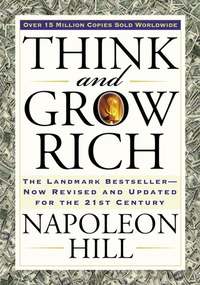
Think and Grow Rich
Thirteen principles of achievement drawn from Hill's study of wealthy people
Napoleon Hill says the idea for the book came from a suggestion by Andrew Carnegie. It builds on his earlier work The Law of Success, the result of more than twenty years of study of wealthy individuals, and condenses its 16 laws into 13 principles that Hill presents as a Philosophy of Achievement. They include Desire, Faith, Autosuggestion, Persistence and the Power of the Master Mind. The Ralston Society first published it in March 1937, during the Great Depression, and the first print run of 5,000 copies sold out in six weeks at $2.50 each.
More about this book
Who
Napoleon Hill, and Andrew Carnegie, whose suggestion Hill says prompted the book.
World
A personal-success philosophy first published in the Great Depression. Hill says the principles apply to any line of work, though much of the text concerns income.
What makes it different
The Napoleon Hill Foundation says over 100 million copies had been sold worldwide by 2015. The AP reported more than 20 million at Hill's death in 1970.
Feel
Driven and motivational.
Page count and cover shown for: Selected edition
Further reading
- Think and Grow RichWikipedia