 Historical Fiction · Thoughtful
A frontier settlement grows into a town, and a pioneer woman grows rich
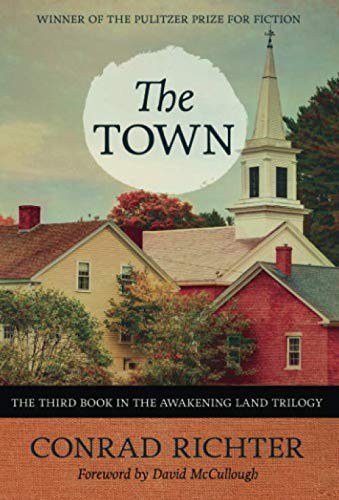
The Town
A pioneer woman watches her settlement turn into a town
Sayward Luckett Wheeler lives through the transformation of her Ohio Valley settlement, first called Moonshine Church and later renamed Americus, into a prosperous town. She grows wealthy by selling land, but she struggles with the loss of her frontier way of life. Her youngest son, Chancey, a sensitive young man, clashes with the family over progress and is drawn into a forbidden romance.
More about this book
Who
Sayward Luckett Wheeler; her husband Portius Wheeler; and their youngest son, Chancey.
World
The Ohio Valley, in a frontier settlement that grows from Moonshine Church into the town of Americus, with Cincinnati nearby.
What makes it different
It is the third and final book of The Awakening Land trilogy, after The Trees (1940) and The Fields (1946). Richter researched early Ohio Valley pioneer speech, and the book uses archaic words. It won the 1951 Pulitzer Prize for Fiction.
Feel
Slow and reflective, with old-fashioned speech.
Page count and cover shown for: Selected edition
Behind the book
Richter researched early Ohio Valley pioneer speech, which is why the book uses archaic words such as butts for trees.
Source: Wikipedia
Further reading
- The TownWikipedia