 Historical Fiction · Melancholic
The absent father from Little Women, serving as a Union chaplain in the Civil War
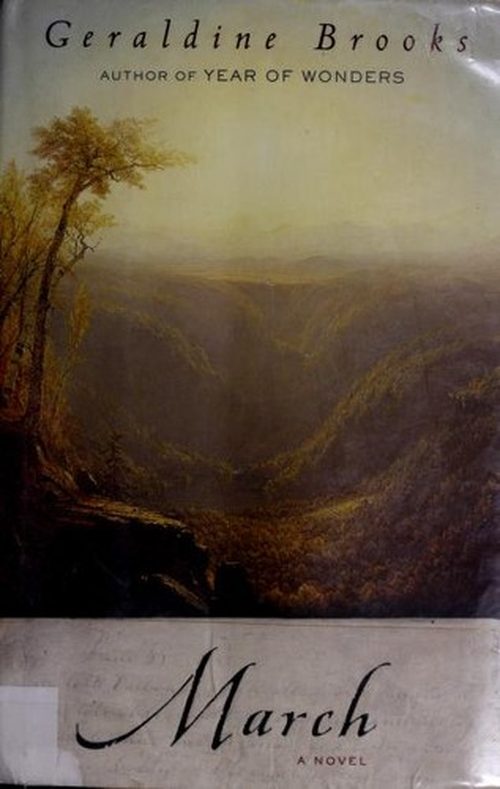
March
What happened to the absent father in Little Women?
Mr. March, the father who is away in Louisa May Alcott's Little Women, is an idealistic abolitionist who serves as a Union army chaplain in the Civil War. The brutality of the war and the Union's own racism test his faith. After a near-fatal illness he has to return to a family that does not know what he has been through. Geraldine Brooks imagines what he saw, and what he left out of his letters home.
More about this book
Who
Mr. March, the absent father from Louisa May Alcott's Little Women, an abolitionist who leaves his wife and daughters in Concord, Massachusetts, to serve as a Union Army chaplain. Mrs. March is a fiery character, and Thoreau and Emerson appear as friends of the family.
World
1862, the Civil War, starting in Concord.
What makes it different
The story is told from the father's side, and in his letters home he holds back the full brutality he sees. He is partly modeled on Alcott's own father, the teacher and abolitionist Amos Bronson Alcott, and Brooks drew on his letters and journals as well as on Thoreau's and Emerson's writing. The idea began with a Union soldier's belt buckle found in the courtyard of her home near an 1861 battle site on the Potomac.
Feel
A historical novel, published in 2005. It won the 2006 Pulitzer Prize for Fiction.